
By Cultural Kare Magazine
Minneapolis, MN — Saturday, January 24, 2026
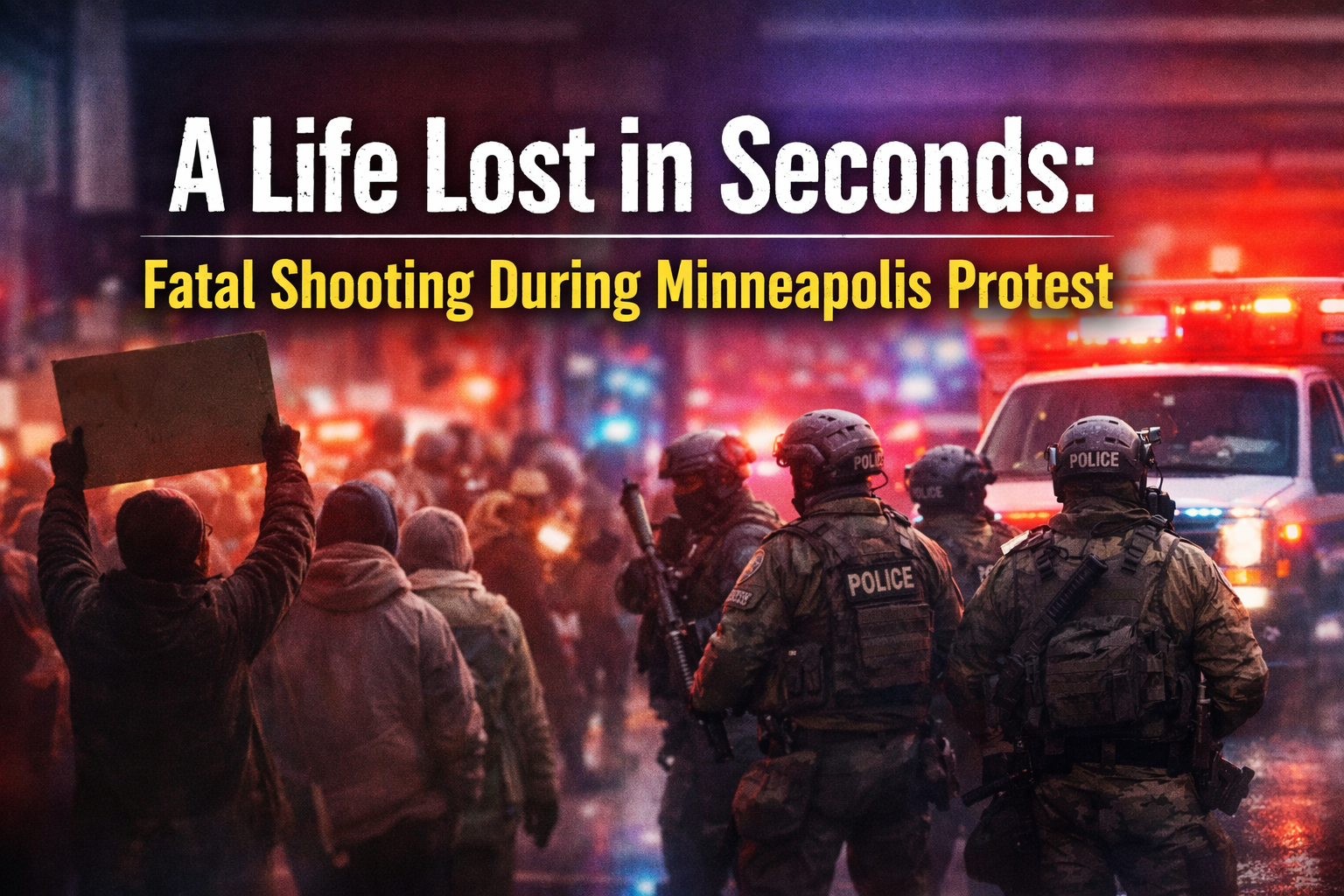
Minneapolis woke up today to heartbreak and rising tension after a fatal shooting involving federal law enforcement during a public protest. The man killed has been identified in early reports as Alex Pretti, 37, a Minneapolis nurse, described by colleagues as someone who worked in intensive care and spent his career helping keep people alive.
Now, his death has left the city demanding a clear answer to a simple question:
What happened—step by step—and why did it end with deadly force?
The shooting occurred amid a protest linked to federal immigration enforcement activity in Minneapolis. As news spread throughout the morning, community grief quickly turned into public outrage, fueled by circulating video, witness accounts, and conflicting claims about the moments leading up to the gunfire.
What Happened Today
According to early reporting, the confrontation unfolded during a protest where federal officers were present and actively engaging with demonstrators. Multiple accounts describe Pretti stepping toward officers during an altercation—what some witnesses say was an attempt to intervene or de-escalate.
Then the scene escalated rapidly.
In footage described publicly by news outlets, Pretti appears to be sprayed, forced to the ground, and shot—a sequence that has become the center of debate and investigation.
Federal officials have reportedly suggested the shooting was connected to an alleged threat. But community members, legal observers, and people reviewing video say what they see raises serious questions about whether force was justified—and whether this death could have been prevented.
A City With a Long Memory
In Minneapolis, public trust has been fragile for years—not because residents don’t understand the need for safety, but because many feel they have watched too many tragedies unfold with the same pattern:
A death.
A statement.
A promise to investigate.
And then long stretches of silence.
That history is exactly why people moved quickly today—not just to mourn, but to document, preserve evidence, and demand transparency now, not later.
Who Alex Pretti Was
The loss of life is not abstract for the people who knew him.
Pretti was reportedly a healthcare worker who spent his days in critical care—working with patients in their most vulnerable moments. In a city where nurses and healthcare workers carried communities through crisis after crisis, his death has hit with a particular kind of sting.
People who knew him are describing him as someone who showed up for others—someone who served.
What Makes This Case So Urgent
In the hours following the shooting, the most pressing concern from residents wasn’t just emotional—it was procedural.
Because when a person is killed by law enforcement, the public deserves answers that are specific, verifiable, and complete, including:
- A full timeline of events
- Who fired the shots
- What warnings were given—if any
- What threat officers claim existed
- Whether any body camera footage exists
- Whether de-escalation was attempted
- Medical response time and intervention
And because this involves federal officers, residents have also asked:
Who is overseeing the oversight?
Conflicting Accounts, Real Consequences
This is where the story becomes bigger than one street corner.
In incidents like this, the early hours matter—not only because they shape public perception, but because the first narrative often becomes the dominant one, even before facts are verified.
Today, Minneapolis is facing competing versions of events:
- Federal law enforcement reportedly indicating justification tied to safety concerns
- Witnesses and video accounts suggesting the situation may have been escalated unnecessarily, and that the response was disproportionate
In communities that already feel over-policed and under-protected, contradictions don’t just create confusion—they create fear.
And fear is a spark.
Protest, Policing, and the Line Between Order and Harm
Protests are, by nature, emotional. They are meant to be. They happen when people feel unheard by normal channels.
But what unfolded today adds weight to a growing national tension: the expanding visibility of federal enforcement in local spaces—and the dangerous outcomes that can follow when crowd control shifts into force, and force turns fatal.
For many in Minneapolis, this is no longer simply about “law enforcement activity.”
It’s about how quickly public life can turn deadly, and how easily a person can become a headline instead of a human being.
What Happens Next
As of tonight, community leaders and residents are calling for an independent and transparent investigation, with the release of evidence that can confirm or disprove official claims.
People are asking for more than statements—they are asking for proof.
They want the full story, not the version that fits neatly into a press release.
And as demonstrations continue, Minneapolis is bracing for what comes next: more protest, more national attention, and the possibility of another familiar cycle—unless accountability breaks it.
Cultural Kare Magazine’s Reporting Lens
At Cultural Kare Magazine, we report beyond the headline. We report what the community feels in its chest when tragedy repeats itself.
Today, a nurse is dead. A family is grieving. A city is demanding answers.
And the question Minneapolis is asking tonight is the same one communities across the country ask after moments like this:
If video exists… if witnesses exist… if the public is watching… how can the truth still feel so far away?
We will continue to follow this story as more verified information becomes available.
Rest in power, Alex Pretti.