


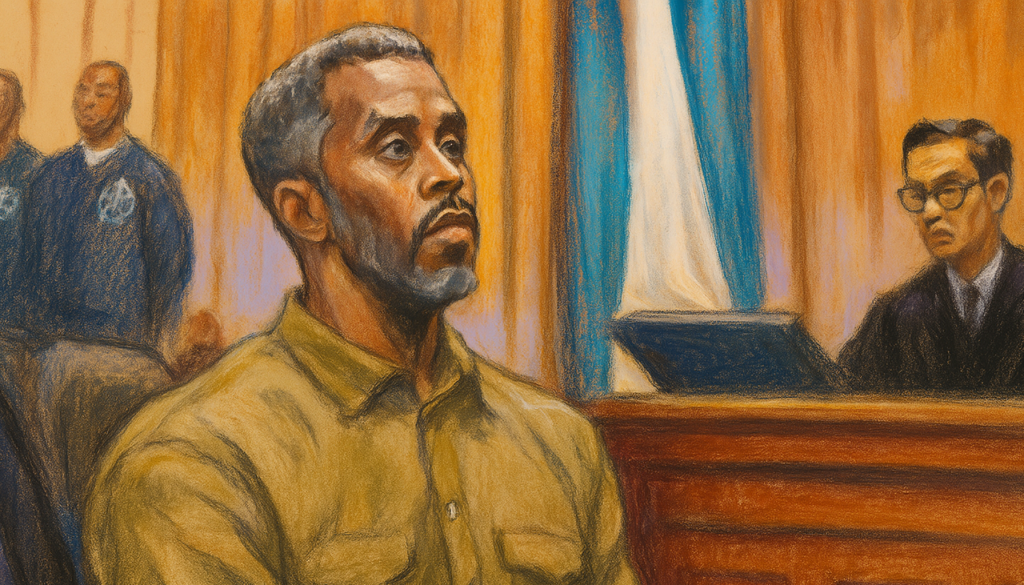
This week, the trial of music mogul Sean “Diddy” Combs took a sharp and emotional turn as two key witnesses—both testifying under pseudonyms—delivered powerful, often chilling accounts of what they say happened behind closed doors. With each passing day, the courtroom has become a space not only for legal proceedings but for raw testimony, defiant cross-examinations, and a spotlight on the complicated nature of power, trauma, and celebrity.
A Week of Testimony Under Pseudonyms
The prosecution introduced two witnesses—referred to in court as Mia and Jane—to protect their identities due to the sensitive and high-profile nature of their experiences. Both women testified to what they called a long-standing culture of fear, control, and coercion surrounding Combs and his inner circle.
Mia, a former assistant, described being “terrified and brainwashed,” claiming she was physically abused, emotionally manipulated, and subjected to forced labor and sexual exploitation. In what many courtroom observers described as a gut-wrenching moment, she recounted feeling like she had “no way out.” During cross-examination, defense attorney Brian Steel pressed her aggressively, suggesting inconsistencies in her story and calling her credibility into question.
Jane, who was in a relationship with Combs as recently as 2024, told the court she was routinely pressured into engaging in drug-fueled sexual acts with escorts at his request—often against her will. Her voice cracked as she described moments where saying “no” simply wasn’t an option. The courtroom listened in near silence.
Inside the Enterprise: What the Prosecution Is Building
What’s becoming increasingly clear is the strategy at the heart of the prosecution’s case: this isn’t just about isolated incidents—it’s about an alleged enterprise. Prosecutors have outlined a pattern of behavior where Combs’ staff—security, assistants, and others—allegedly played roles in facilitating abuse, covering it up, and silencing victims.
One striking moment came when a former security supervisor testified that Combs attempted to buy surveillance footage of an alleged 2016 assault involving Cassie Ventura for $100,000—on the condition that the recipient sign a nondisclosure agreement.
In the words of the prosecution, this was not just a culture of control. It was a calculated system of suppression.
Defense Strategy: Cast Doubt, Sow Uncertainty
The defense has remained on the offensive, challenging each witness with unrelenting intensity. Their position is clear: these relationships were consensual, and the witnesses are motivated by financial gain or public attention.
Nicole Westmoreland, representing Combs, zeroed in on one dramatic testimony—where Jane claimed she was “dangled over a 17-story balcony.” Westmoreland demanded specific details, calling the claim “sensational” and “unproven.”
Observers noted the stark contrast in tone between the prosecution’s quiet, emotional questioning and the defense’s confrontational style—a strategy aimed at destabilizing the witness’s credibility in the eyes of the jury.
Beyond the Courtroom: Public Reactions and Political Rumblings
The ripple effects of this trial extend far beyond the courtroom.
Public interest in the case has surged, with social media threads dissecting each development and celebrities cautiously weighing in. Tensions even escalated after former President Donald Trump commented on the possibility of issuing Combs a pardon—a statement met with sharp criticism, most notably from fellow music figure 50 Cent, who publicly vowed to “make sure Trump hears about this case firsthand.”
Inside the courthouse, emotions are running high. One spectator was escorted out this week for laughing during testimony—prompting a stern warning from the judge. Overflow rooms have filled daily.
What to Watch Next Week
This case is far from over. Prosecutors are expected to call more former employees, including those involved in day-to-day operations at Combs’ properties. Legal analysts say these witnesses could either strengthen the enterprise argument—or present opportunities for the defense to poke further holes.
Meanwhile, questions remain:
• Will Cassie Ventura herself take the stand?
• Are there more victims willing to testify?
• Will the prosecution be able to establish a direct link between Combs’ actions and a broader pattern of criminal behavior?
Final Word
As this high-profile case unfolds, it’s a reminder of how complicated the intersection of power, celebrity, and justice can be. The courtroom is a place of truth-seeking—but also of performance. And for now, the world is watching closely, waiting to see what truths rise to the surface.
This has been Tephanie Delaney, reporting for Cultural Kare Magazine. We’ll continue following this case as it develops.


