


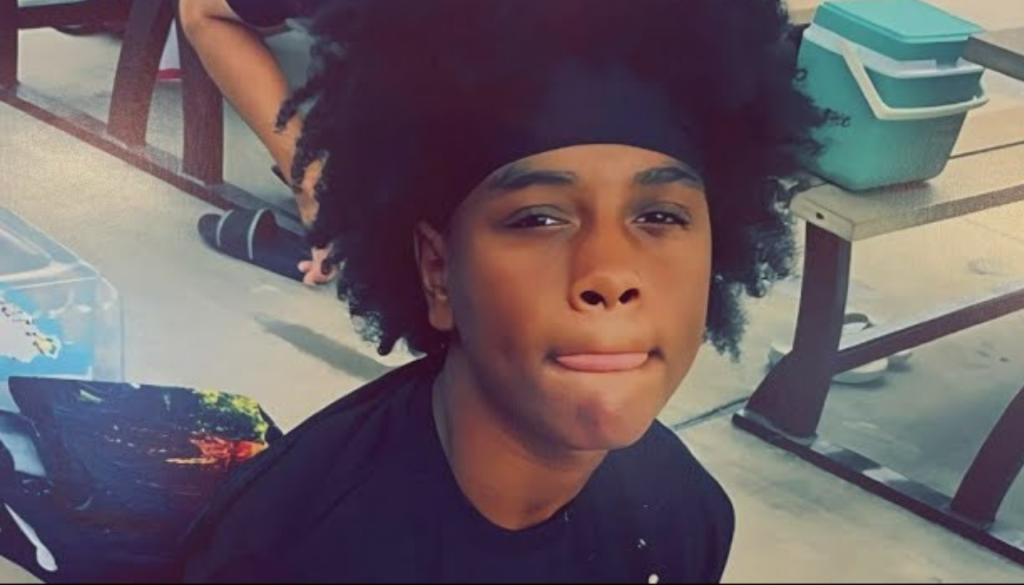
By Tephanie Delaney | Cultural Kare Magazine
A Minnesota community is reeling after the remains of 16-year-old Jordan “Manny” Collins Jr. were discovered in a landfill following a monthlong search that ended with murder charges against his father. The grim case has drawn statewide attention, raising fresh questions about family violence, community support, and the pursuit of justice for Black youth.
A Promising Life Cut Short
Jordan Dupree Collins Jr., known to family and friends as “Manny,” was last seen alive on May 8, 2025, in Columbia Heights, a suburb north of Minneapolis. Described by loved ones as kind-hearted and soulful, the teen loved basketball, skateboarding, and spending time with family.
“He was a good kid with an old soul,” his great-grandmother Mary Berry told local media. “He was always kind and good-hearted.”
As days passed without contact, Manny’s family reported him missing. Volunteers, relatives, and local authorities searched for clues, canvassing neighborhoods, posting flyers, and combing through surveillance footage. Their hopes dimmed when investigators traced a garbage truck’s route to the Elk River Landfill.
A Grim Discovery and Shocking Allegations
In late June, after weeks of searching, authorities confirmed that Manny’s remains were found at the landfill. The criminal complaint filed in Anoka County describes a deeply disturbing scene: prosecutors allege Manny was decapitated, stabbed multiple times, and dismembered before his body was placed in the trash and transported to the landfill.
Police say they discovered extensive blood evidence in the Fridley apartment where Manny’s father lived. Knives recovered at the scene tested positive for Manny’s blood, and DNA evidence further connected the killing to the residence.
Prosecutors have charged 47-year-old Jordan Dupree Collins Sr. with second-degree murder, accusing him of killing his son “with intent but without premeditation.” Authorities called the level of violence among the most extreme they have encountered in such cases.
Forensic psychologist Dr. Andrea Lovett described the alleged acts as “shocking,” noting this was “on the more extreme end” of family-related homicides.
Collins Sr. was arrested July 7 and is being held on $2 million bail with conditions, or $3 million without conditions.
Family Grief and Community Outpouring
Manny’s family held vigils in his honor, releasing balloons, lighting candles, and sharing memories of a boy whose life was marked by warmth and promise. His mother, Ashley Berry, joined others at a St. Paul fundraiser where hundreds gathered to support funeral expenses and show solidarity.
“Manny needs justice,” Mary Berry said tearfully. She added that although forgiveness is part of her faith, it will take time. “I’m a forgiving person. I’m going to forgive him one day. But Manny needs justice.”
The loss has reverberated beyond family circles, shaking neighbors, classmates, and community members grappling with questions of how such a tragedy could unfold undetected.
A Broader Conversation
Advocates point to Manny’s killing as an urgent reminder of the dangers of family violence and the need for better resources to protect vulnerable youth. His death also highlights the challenges Black families face in securing attention and support in missing-persons cases, with many lamenting that Black children’s disappearances receive less media coverage.
The case has spurred calls for expanded trauma-informed counseling services, support for surviving family members, and renewed attention to domestic violence prevention—even when the signs are not obvious.
The Road Ahead
As the legal process moves forward, Manny’s family and community say they will continue pushing for accountability. His father faces a court process that could stretch many months, with a tentative trial date set for August.
Meanwhile, those closest to Manny are left to hold onto memories of his smile, his easygoing spirit, and the dreams he’ll never get to fulfill.
“He was supposed to be here. He was supposed to grow up,” said a family friend at the vigil.
Honoring Manny’s Memory
In the face of overwhelming grief, Manny’s family is determined to honor his life, not just his death. They have asked the community to remember him not as a crime victim but as a boy who loved his family, loved life, and deserved so much more.
“He’s an angel now,” Mary Berry said quietly at his vigil. “We will never forget him.”
Sources: CBS News Minnesota, Star Tribune, KSTP, People Magazine


